

Not Big 5 -- but wonderful nonetheless!

Every non-big 5 mammal I got photos or footage of is featured here and there are some good ones! Just two new mammals -- a Cheetah and a Jackal, but good time rambling with all of them.
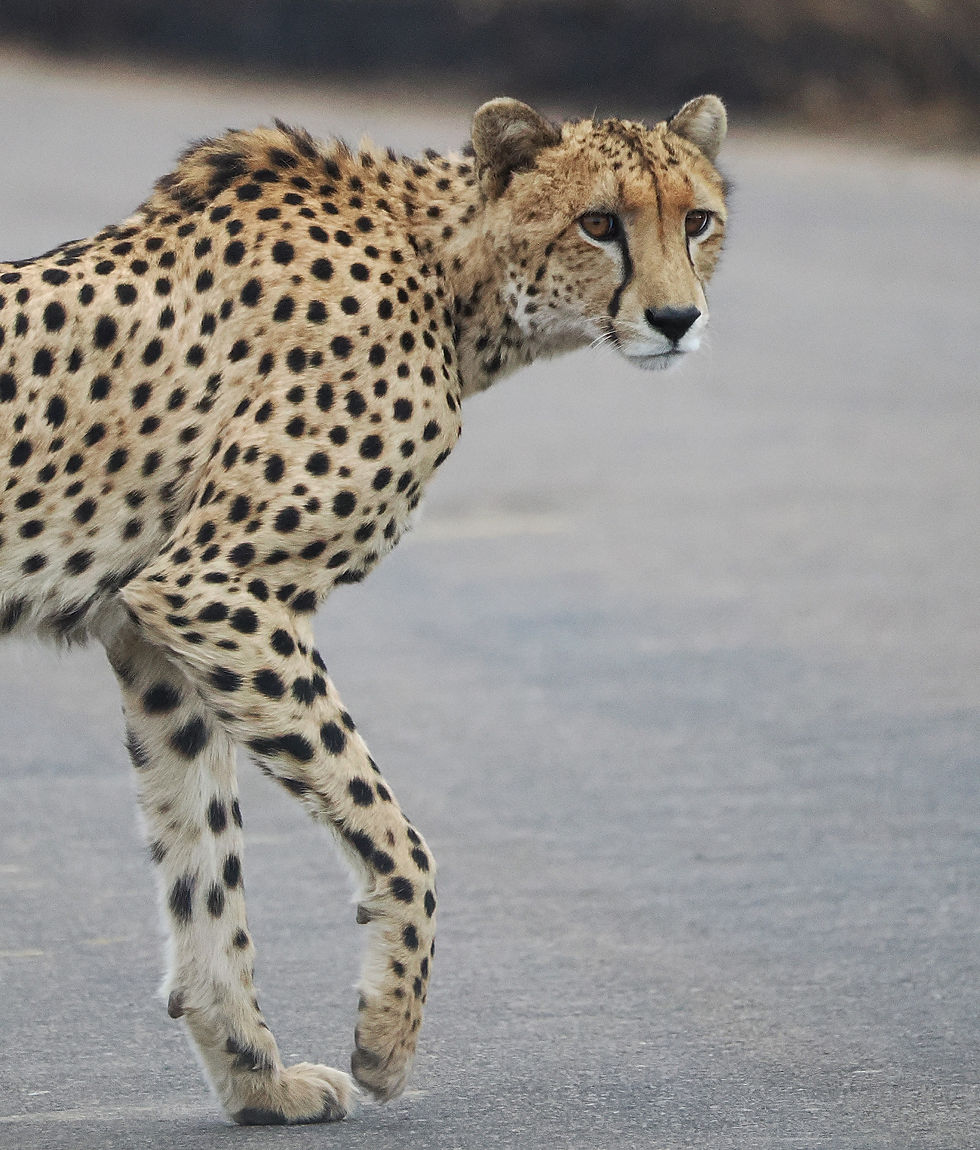
The Cheetah’s head is rather small in proportion to its body which makes it more streamlined and has smaller ears to accommodate their design. Cheetah are easily recognized by distinct ‘tear marks’ which curve downwards from the tear-duct corners of the eyes to the corners of the mouth. A feature that is said to reduce glare on a bright and open savanna plain.
To accompany the large set of lungs, their small head and smaller teeth makes additional room for larger nasal aperture which improve their oxygen intake whilst at full sprint. On top of that they have modified and aerodynamic nostrils to maximize the flow of air through their energizing coolant system.
Cheetahs have been designed for speed and are well known for being the world’s fastest land mammals. With many numbers being tossed around the truth is that they can reach speeds up to 62 mph at full sprint. Their small heads, long legs, long flexible spines and narrow shoulders and hips all work together to enable it to reach these high speeds.
We got to spend @1 hour with this beautiful young male cheetah -- the only disappointment is we did not get to see him run! Still no complaints...




Antelope – there are many different antelope species in Kruger, we did not see all of them, but the ones we saw were choice.
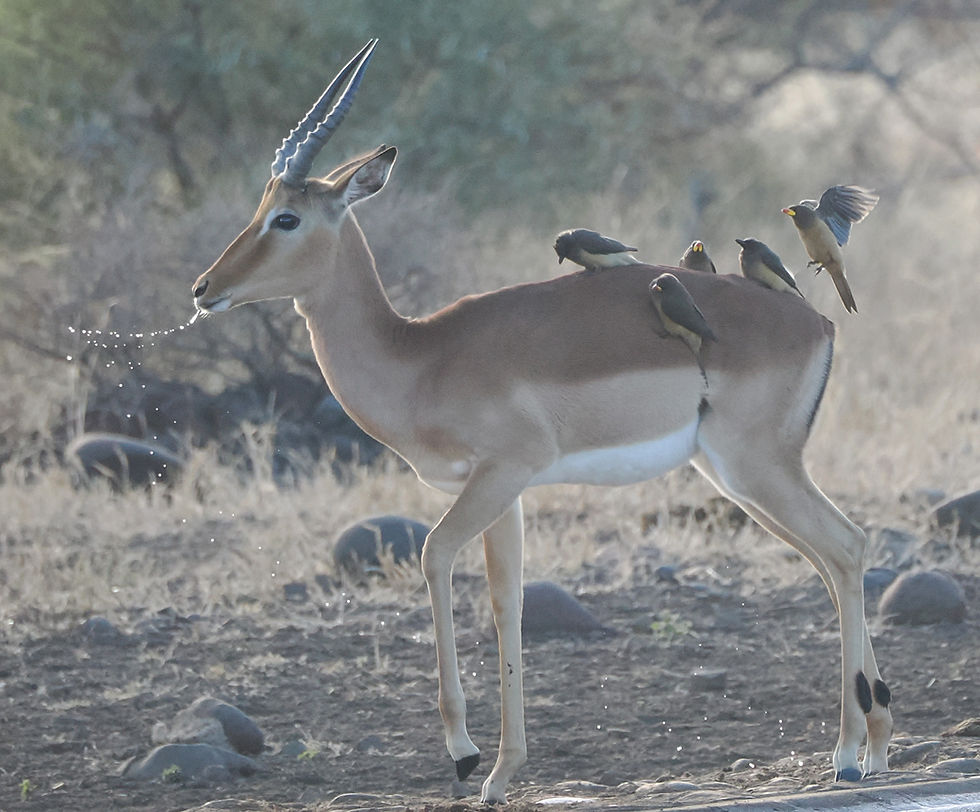
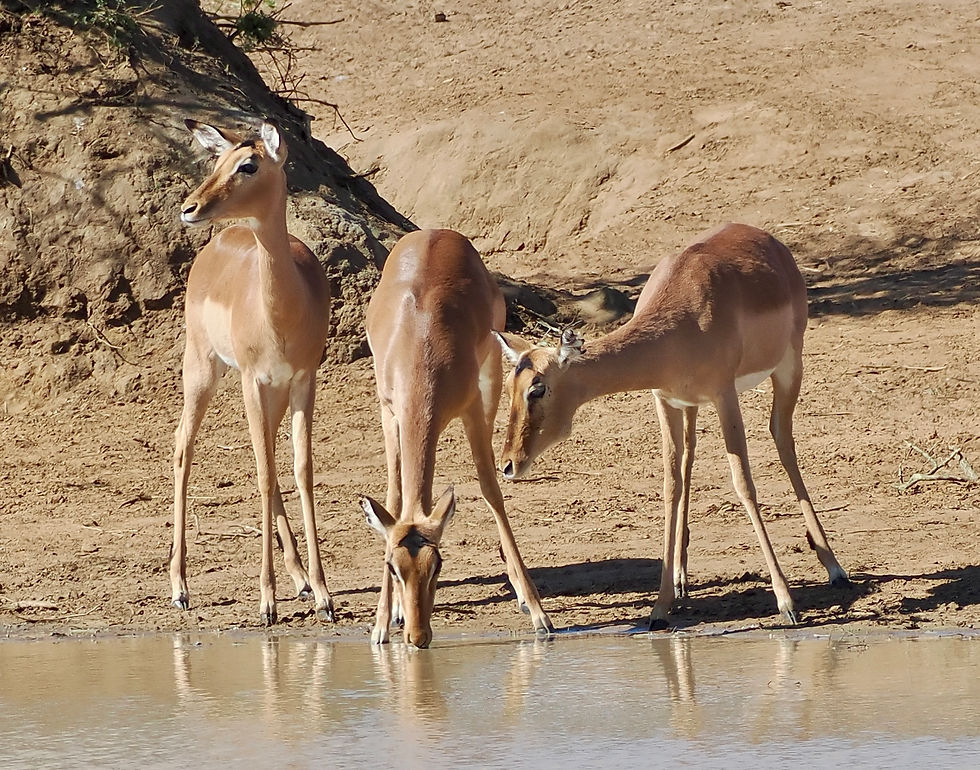
Impala @100,000 individuals in Kruger - active mainly during the day, they can be be gregarious or territorial depending upon the climate and geography. Three distinct social groups can be observed: the territorial males, bachelor herds and female herds. The impala is known for two characteristic leaps that constitute an anti-predator strategy.
An annual, three-week-long rut takes place toward the end of the wet season, typically in May. Rutting males fight over dominance, and the victorious male courts females in estrus. Gestation lasts six to seven months, following which a single calf is born and immediately concealed in cover. Calves are suckled for four to six months; young males are forced out of the all-female groups—join bachelor herds,




Klipspringer @ 2,000 individuals in Kruger – very territorial – not a lot of those rocky cliffs habitat in Kruger. A small antelope that enjoys fruits, flowers and young plants. It's also an avid, not to mention agile, rock climber. Their coat is a very coarse fur that cushions & insulates the body.
Take note of its hooves are cylindrical and point down which gives it a tiptoe walk that facilitates sure-booted agility on the rocky cliffs it calls home. They form life-long pairs, each marking out a small territory, where one browses while its mate acts as sentry. If one partner spots danger it gives a piercing whistle – followed almost immediately by its mate’s. Then both will usually bound away a short distance.
We felt very lucky to spot these creatures twice -- the first visit was @15 minutes long with a little family.
Adult Male

Mama (in back) & baby

They are amazing climbers!
This was the second sighting -- note the black spot in the front of the eye it has a secretion they use to mark their territory -- there are not a lot of rocky cliffs in Kruger.

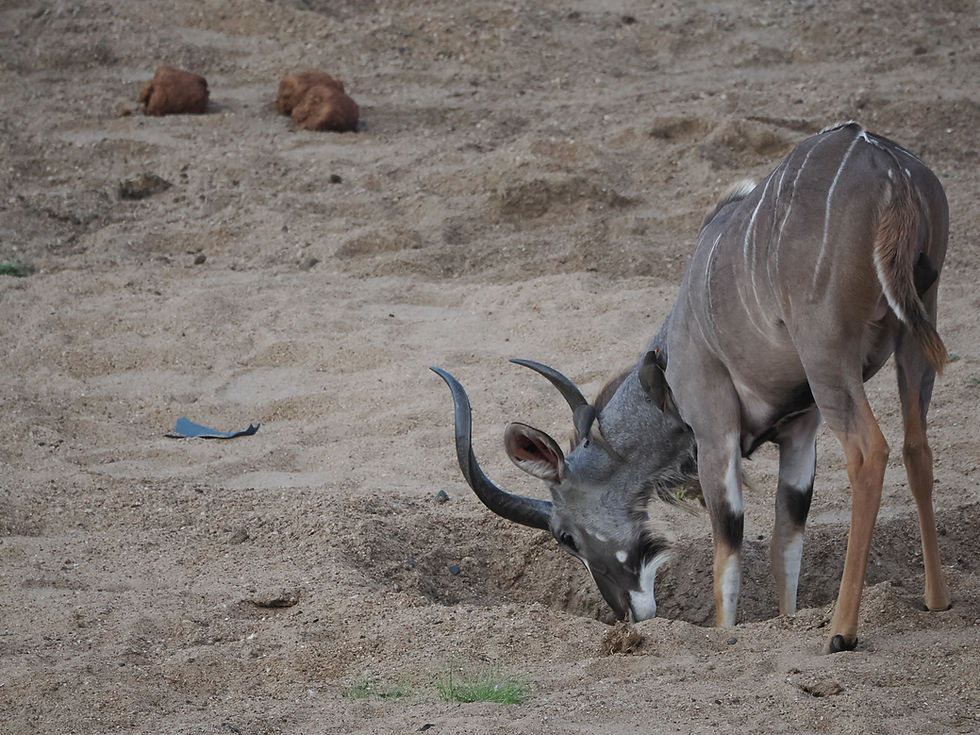
Greater Kudu @12,000 individuals in Kruger– Kudu bulls bear massive, long, spiral horns which reach record lengths of over 5 feet. Horns grow to their full length at the age of six years. Tawny-brown to grey-brown coat, marked with white stripes on flanks which vary greatly in shape, size and pattern. V-shaped band on forehead and white spots on cheeks. Manes of long hair extend from the back of the head along the back to the tail, as well as on the lower neck to the belly.

Hitchhiking Red-billed Oxpeckers (They peck Kudu too)

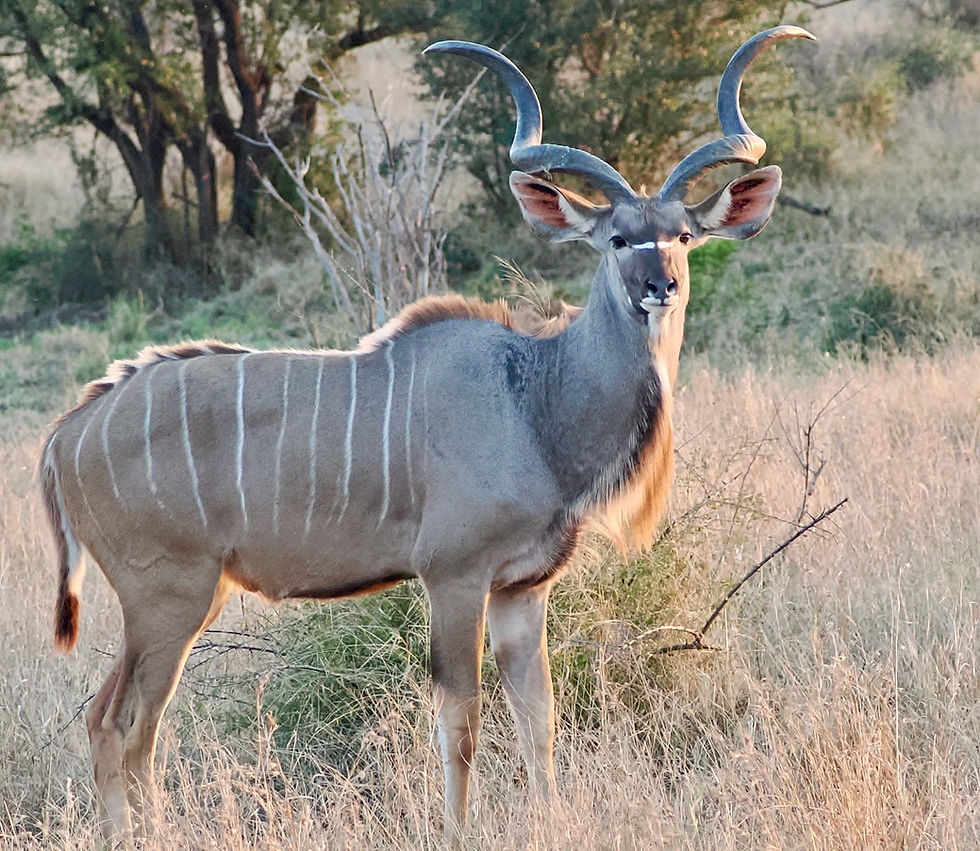


This young male Kudu is exploring a water access hole dug by an Elephant.
Nyala @7,000 individuals in Kruger - They sport a handsome slate-brown shaggy coat, marked with white vertical stripes and spots on the flanks. Bulls appear more charcoal-grey in color. The bulls have long inward curved horns @2 feet and a white chevroned face. They have a ridge of long hairs along the underparts, from behind the chin to between the hind legs, they also have a mane of thick, black hair from the head along the spine to the rump. An interesting fact is that the juvenile males look like females. It is thought that this camouflages the young males and protects them from the jealous eyes of the dominant bulls. The young males are allowed to grow up peacefully under the protection of the herd.


I love the little chevron on its snout!

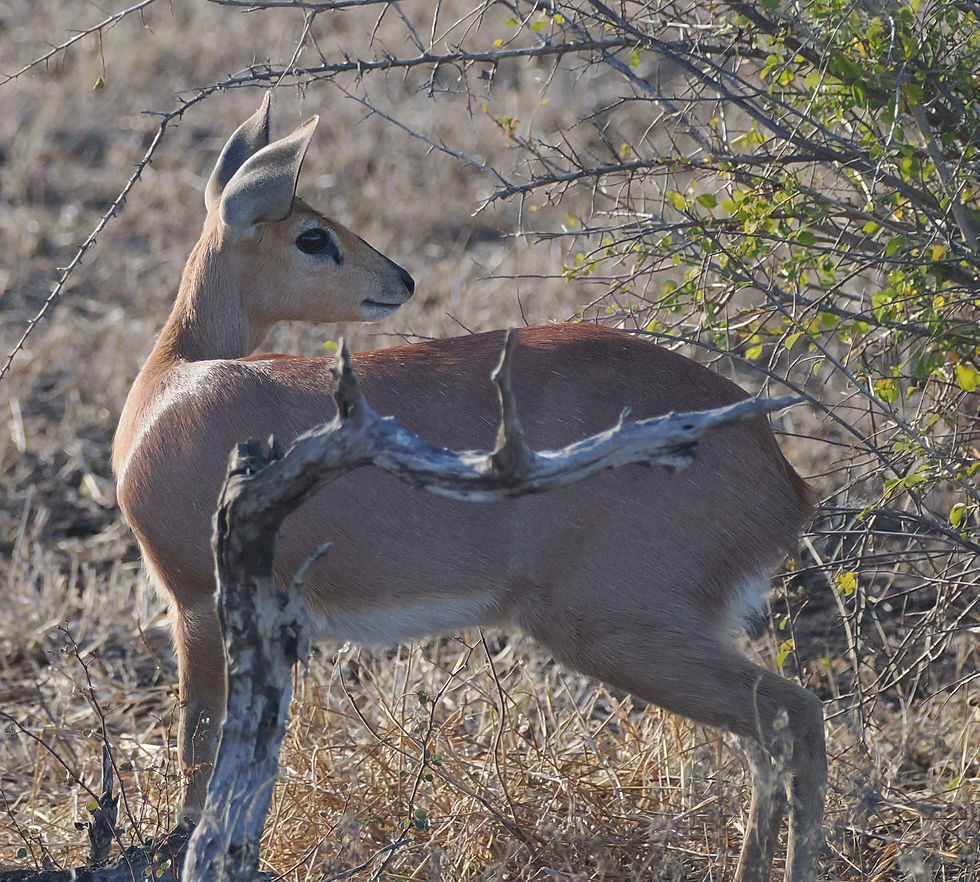
Steenbok @20,000 individuals in Kruger - a “dwarf” antelope measuring up to 2 feet at the shoulder. Ears are large with "finger-marks" on the inside. There is a black crescent-shape between the ears, a long black bridge to the glossy black nose, and a black circular scent-gland in front of the eye. At the first sign of trouble, steenbok typically lie low in the vegetation. If a predator or perceived threat comes closer, a steenbok will leap away and follow a zigzag route to try to shake off the pursuer. Escaping steenbok frequently stop to look back, and flight is alternated with prostration during extended pursuit.



Waterbuck @ 8,000 individuals in Kruger - Waterbuck have a special trick which helps them in the water, they are able to release an oil over their hair repelling water and keeping its coat dry. This oil has a really bad smell, so if the water does not keep the predators at bay the Waterbuck's odor certainly should. Waterbuck have an easily identifiable “follow-me” sign which is a perfect white circle around their rump. This mark has often led to the fable that when Noah built his ark the waterbuck were the first animals to arrive and use the loo, obviously the seat was still wet with white paint and so has marked them for eternity!

Here is the "mark" along with a Little Egret & Cattle Egret

Tesseebe @3,000 individuals in Kruger, are known as the fastest in Africa, reaching speeds up to 56 mph. They are social animals, living in herds and often found grazing alongside zebras and wildebeest, though they primarily feed on different parts of the same grasses. Tsessebe are also known for their unique behavior of smearing mud on their faces and horns, possibly to make them appear larger or for scent marking. It is one of the "Horse faced" Antelope
We saw them on two separate occasions...


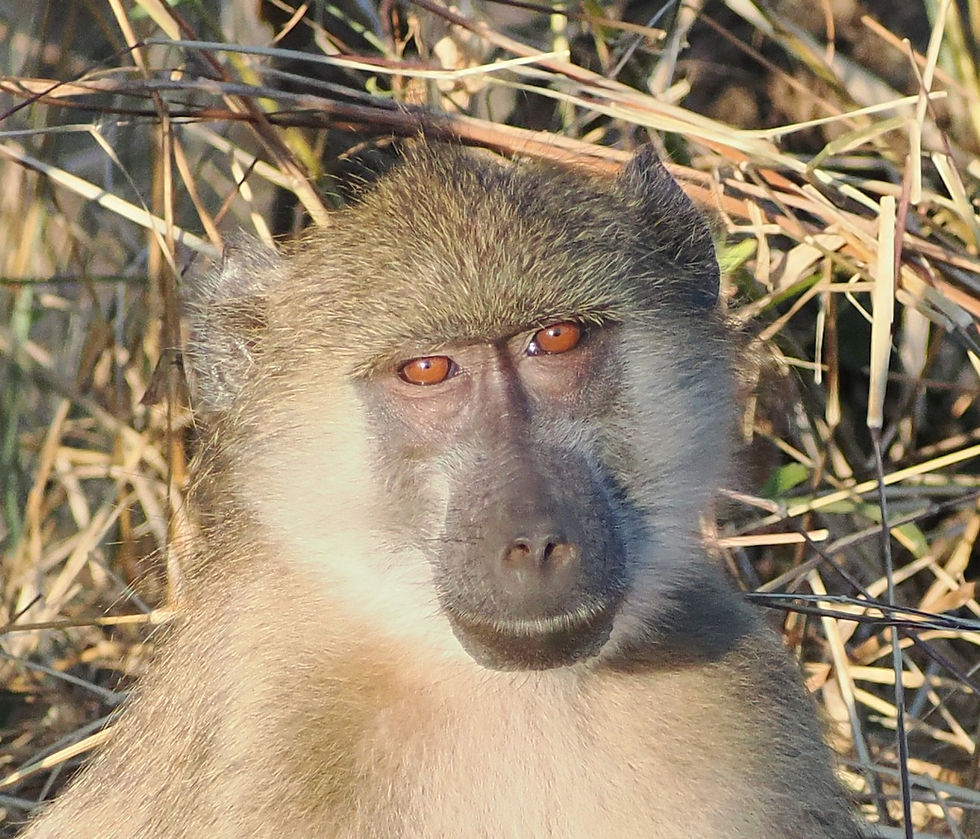
Chacma Baboon have complex social structures with anywhere from 8 to 200 individuals per troop. They use at least 10 different vocalizations to communicate. When traveling as a group, males will lead; females and young stay safe in the middle and less dominant males bring up the rear. If you yawn near a Baboon, they will also yawn very wide exposing their impressive jaws!


Vervet Monkeys are known for their unique alarm calls, which vary depending on the predator. They also have distinctive turquoise scrotums in males (see in Blue Edition post). These monkeys are social, live in troops, and spend their days foraging and socializing, retreating to trees to sleep at night. Some populations of vervet monkeys have been observed consuming fermented fruit, leading to what has been described as alcoholic behavior.



Andrew using the laser pointer to play with the youngsters


Tree Squirrel - spend a great deal of time on the ground, foraging for food. When disturbed, Tree Squirrels will always seek the refuge of trees. During the night, territorial family groups nest together in holes in trees.
The males are mainly responsible for territorial defense, although females will also chase intruders when she cares for dependent pups. To promote group cohesion, a common scent is shared by mutual grooming, which is an important facet of the social fiber of this species.

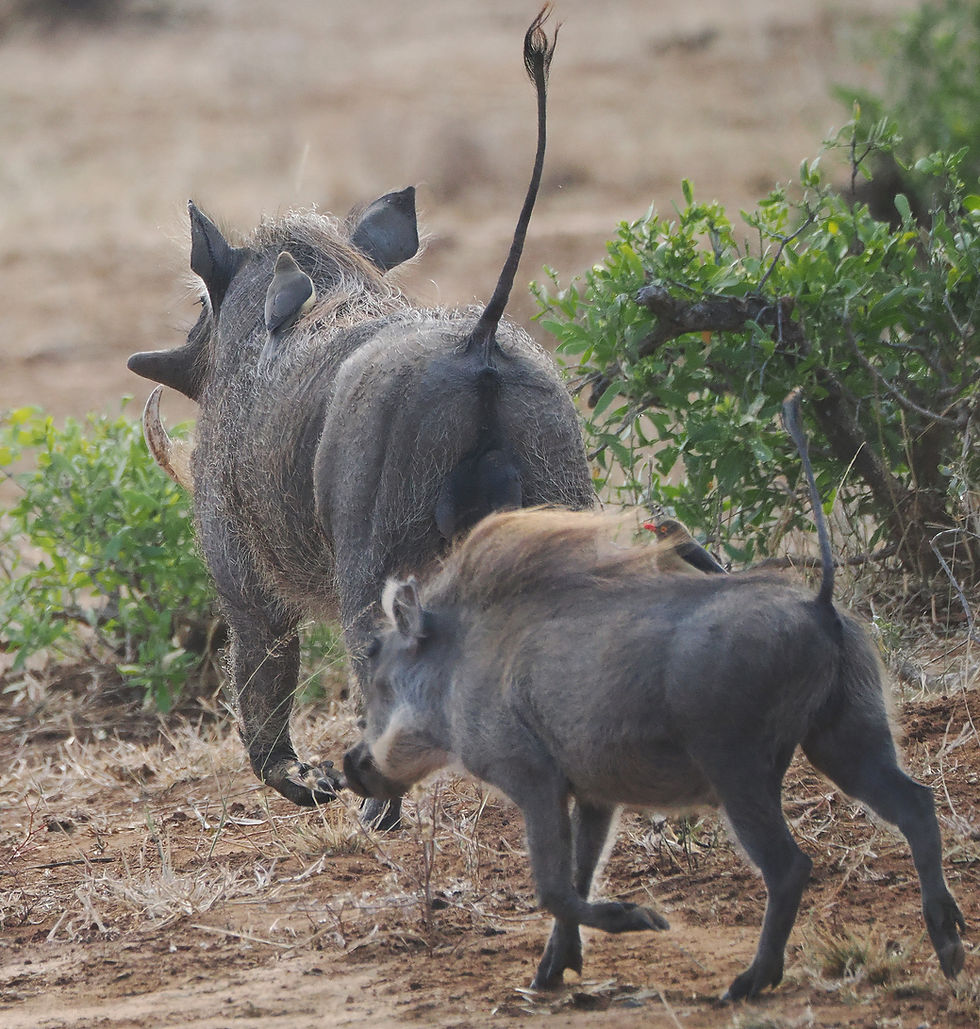
Common Warthog have facial ‘warts’ that give warthogs their name are not warts at all, but thick skin growths. The so-called warts are not uniform in appearance or distribution. They found on the face, particularly around the eyes, are believed to serve as protection during conflicts with other males or predators. The facial warts, in combination with the warthog’s tough skin, can help deflect bites or scratches.
Their tusks are actually teeth and the young warthogs who haven’t developed the tusks yet have tufts of white hair that mimic the look of tusks to predators. They run with their tails straight up in the air and run surprisingly fast (up to 35 mph). Andrew affectionately calls them Pig...


Giraffe are fascinating creatures known for their incredible height, unique spot patterns, and remarkable adaptations. They are the tallest land animals, with even newborns towering over most humans. Their distinctive spots are like fingerprints, with no two giraffes sharing the same pattern. Giraffes are also known for their long necks, which, surprisingly, have the same number of vertebrae as a human neck. Their tongues reach 18 inches. They are surprisingly fast runners, capable of reaching speeds up to 35 miles per hour.


Hippopotamus despite their name meaning "river horse", are actually the third-largest land mammal and are known for their semi-aquatic lifestyle. They spend much of their time in the water, but surprisingly, they can't actually swim, preferring to walk along the bottom of rivers and lakes. Hippos secrete a red, oily substance that acts as a natural sunscreen and also has antibacterial properties. Hippos have massive jaws that can open 180 degrees and exert immense biting pressure, making them one of the most dangerous animals in Africa. In addition, while they prefer the water, hippos can run surprisingly fast, reaching speeds of up to 19 miles per hour – you do not want to be in a hippo’s path when they are running – this huge animal will just run right over you! Note – this is Andrew’s most feared mammal for just that reason.


These are hippo highways -- created when Hippos walk out (and back) of water to forage on land overnight.


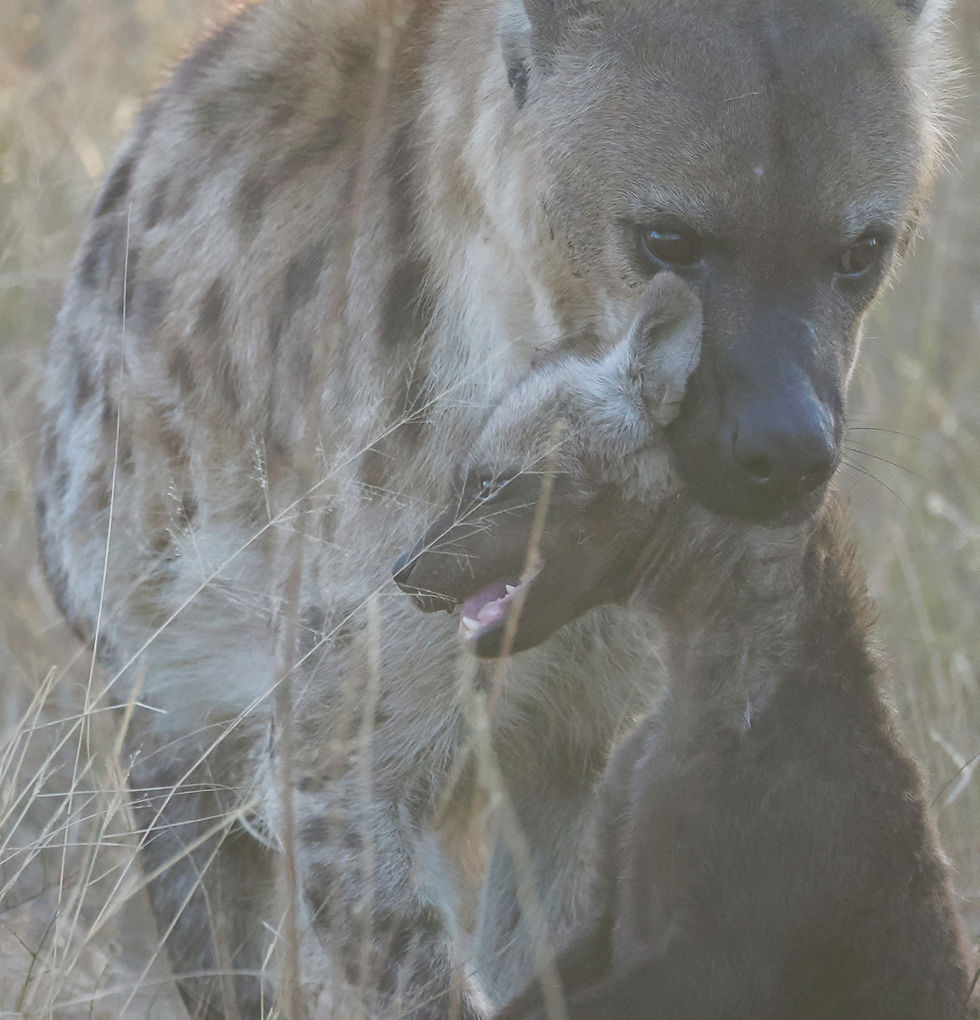
Spotted Hyenas have a reputation for both hunting and scavenging. They are known for their powerful jaws, complex social structures, and unique vocalizations, including the "laugh" that is often associated with them (I did not hear that). While they do scavenge, hyenas are also skilled hunters, often taking down their own prey. Despite resembling dogs, hyenas are more closely related to cats like lions and tigers.
We did not see a lot of Hyenas early in the trip, but they made up for it in the end...


The last morning of the trip was an awesome Hyena encounter -- one word - cubs!




Jackals - They are often depicted as clever and cunning in African folklore, sometimes outsmarting other animals. They can reach speeds of up to 40 mph when hunting or fleeing predators. They hunt small animals, but are also scavengers, supplementing their diet with carrion and even human refuse.
Black-backed jackals are highly vocal. Best known for their high, wailing calls – often given in the early evening, when one individual answers another until an unearthly chorus builds up – they also utter a repeated yapping when tailing a predator; a call that sometimes betrays an irritated lion or leopard.
These jackal are waiting patiently to get at a Lion kill -- the Lions are still there. Good luck!


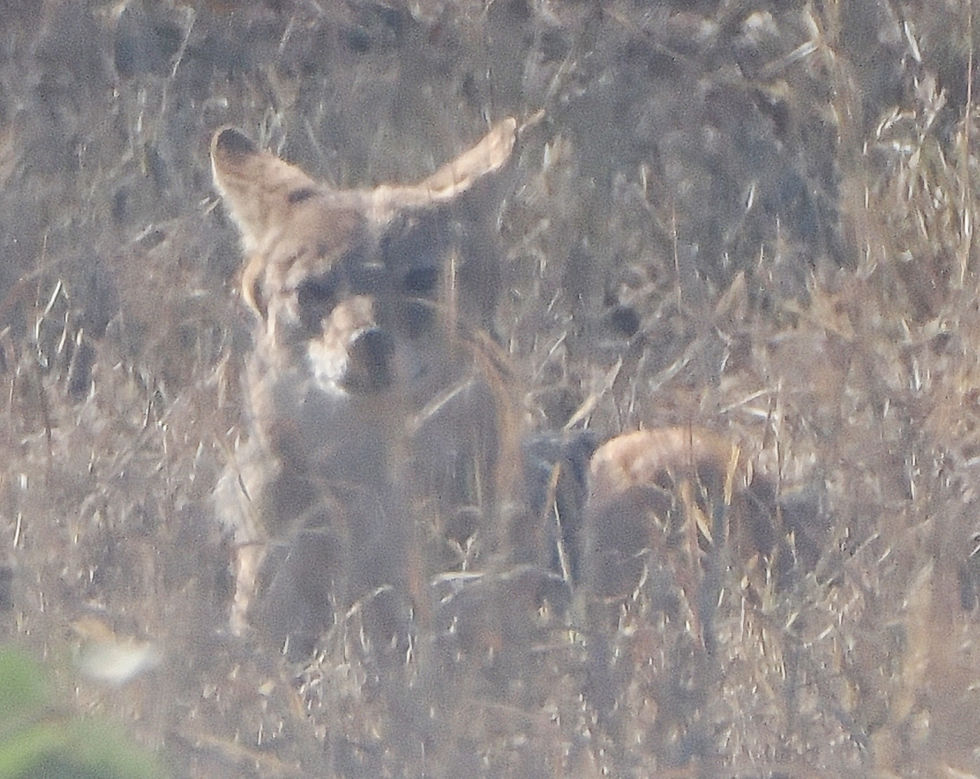
Side-striped jackal has a more doglike appearance and is also larger, weighing up to 14 kilograms. They have grey-brown fur, with faint white stripes on their sides. Their tails are dark with a white tip. And their call is an almost owl-like hoot or a loud scream when threatened. They are only out at dawn/sunrise, sunset & throughout the night – we were lucky to see one - a new mammal for me!


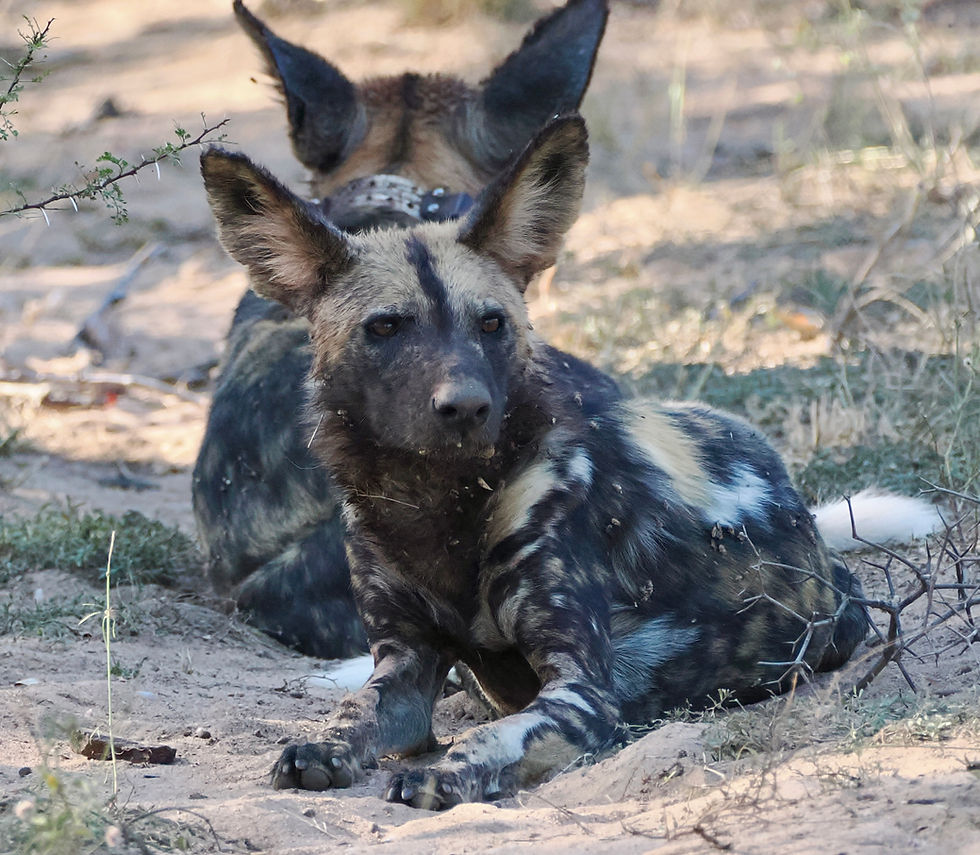
Wild Dogs – also called a Painted Dog and are critically endangered. I’ve been lucky to see them on my first day on safari both visits to Kruger. They generally live up to 11 years and have incredible hearing. They can run up to 44mph and have an 80% success rate when hunting. At Kruger the “alpha” in the pack is fitted with a radio collar, although that is to track the pack, it also enables and easy identification of the Alpha.




Wildebeest – AKA Gnu - Although this is one of the Ugly 5 in Kruger – I happen to think it is quite a stunning animal. The body of a wildebeest appears disproportionate, with a hefty front, slim hindquarters, and spindly legs. Although they are known for the great migration, the population in Kruger is more dispersed.
Note the gland under the eye and the nostril flaps (to keep out insects and dirt)


Waterbuck in background


Younger Wildebeest - not the horns aren't curved yet.

Baby nursing

Zebra wannabe...


Zebra is the most conspicuous herbivore in the savanna, the Zebra’s unique strip pattern and coloration has long been a source of interest and intrigue. The purpose of these stripes has stimulated a great deal of discussion and led to various creative theories. Here are a few that seem plausible but who knows:
The Stripes are for temperature control – what this suggests is that as the black stripe attracts heat with large capillaries to disperse the warmth during the cooler mornings and night, the white stripe effectively dispels during the hotter periods of the day.
The Stripes successfully repel parasites – of course Zebra are not immune to any or all of the typical blood sucking parasites found in the savanna. Their tails are actually really good flyswatters… hmmmmm.
The Stripes could possibly offer a disruptive form of camouflage – this idea suggests that the black and white stripe are effective in removing profile and is able to disrupt form to confuse potential predators when trying to select an individual in a herd.
Maybe it’s just because they are mesmerizing!


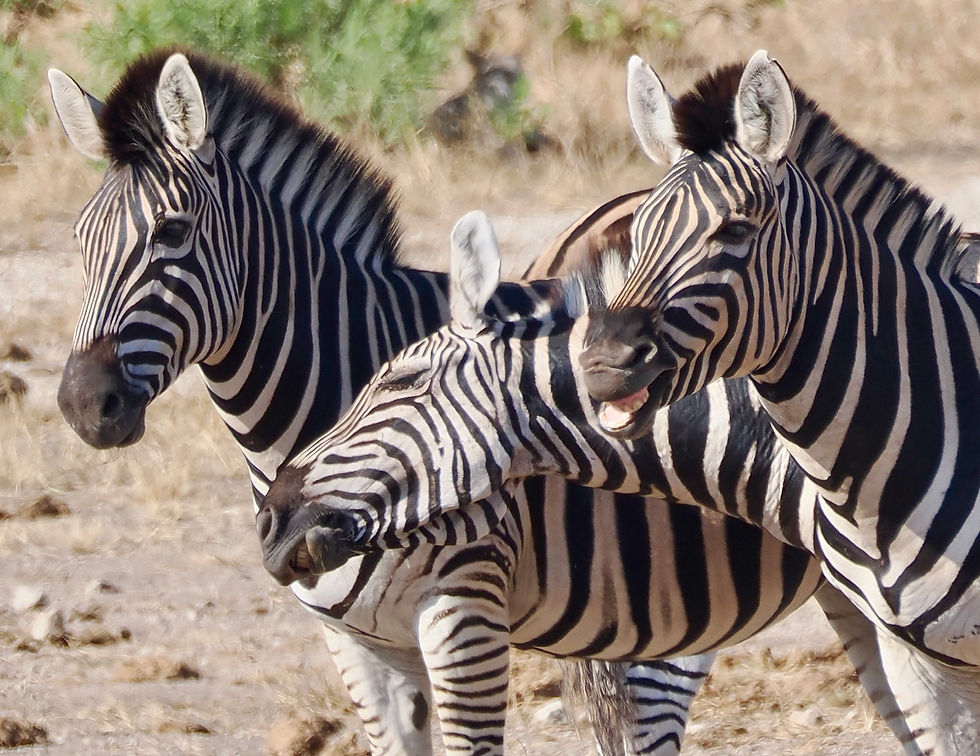


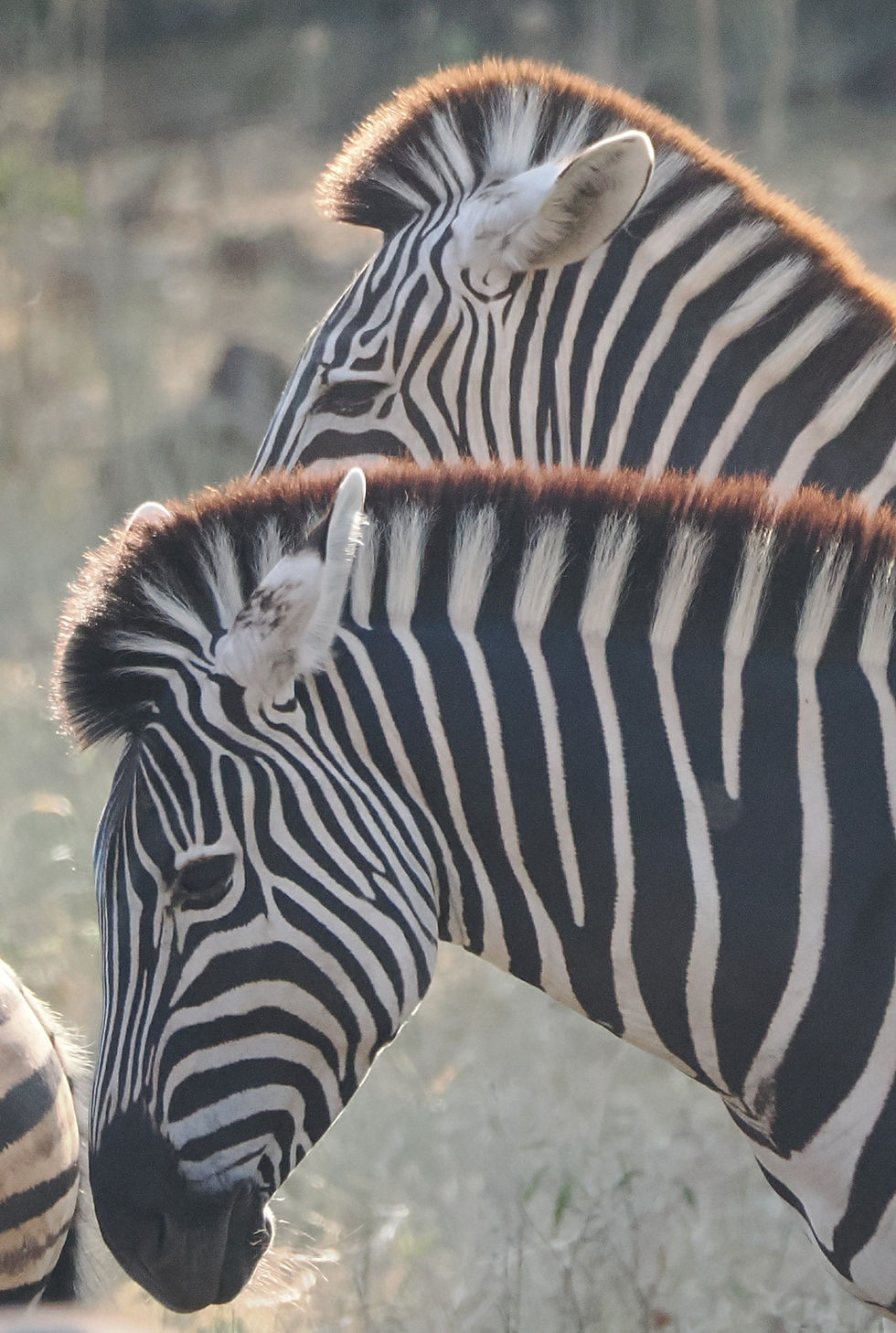

This looks like they are cuddling but actually they are trying to avoid flies. The Zebra's tail is an excellent fly swatter and by placing their head in proximity they get the benefit of the tail/fly swatter.

Some moments of Zen to wrap up the Blog posts for the Wandering Ramble.

Comments