

Splish Splash - Waterbirds

There is a lot of variety in this group from tiny Plovers & Kingfishers to the huge Goliath Heron - what do they have in common? They are mostly found near sources of fresh water.
Brown-hooded Kingfisher - Even though the name "Kingfisher" implies they fish, this species along with many others in Kruger are actually more woodland creatures vs waterbirds. It usually forages on the ground, mainly feeding on insects, and also eating scorpions, reptiles, small birds, and rodents. Ironically most of the birds we saw were near the water, hence the inclusion in this category.


Giant Kingfisher - Up to 19 inches high, as you might imagine, is the largest of the Kingfishers in Kruger. They eat fish up to 7 inches long but actually prefer Crabs. There is a nesting pair that hangs out the Letaba River Bridge. This is one of the bridges that allows you to get out of the vehicle and walk around -- you would think this would flush these birds, it does not. Side note -- this is the bridge where we left the step stool (it was not there when we came back 5 days later).


Pied Kingfisher - This small black & white bird is a wonder -- whether hovering above the water or whacking a fish against a log to make it more palatable, it is enchanting. It sometimes catches two fish at a time -- I saw 9 of them at once on the last trip at Lake Panic Bird Hide. On this trip we saw mostly solo birds, but spotted them 10 times on 5 different days.
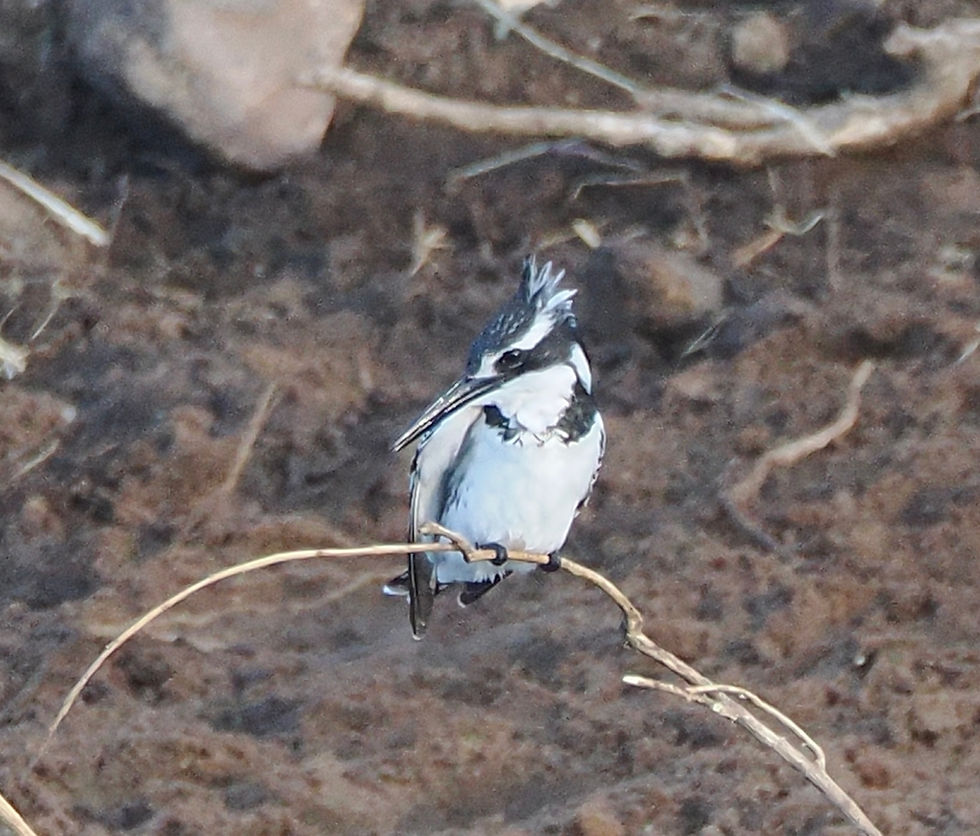


Video Credit - Andrew Wagner, Safaria.co.za
Three-banded Plover - These little ones will show up where ever there is water, puddles, lakes, lazy rivers, they were there. Fun fact - they often lay their eggs in animal poop to disguise them... ok, maybe not fun, but funky...


Blacksmith Lapwing - Lapwings are actually just large Plovers - noted for its slow flight. Like Laughing Gulls, they sometimes tremble their feel to bring up hidden prey. They can be found on fields as well.
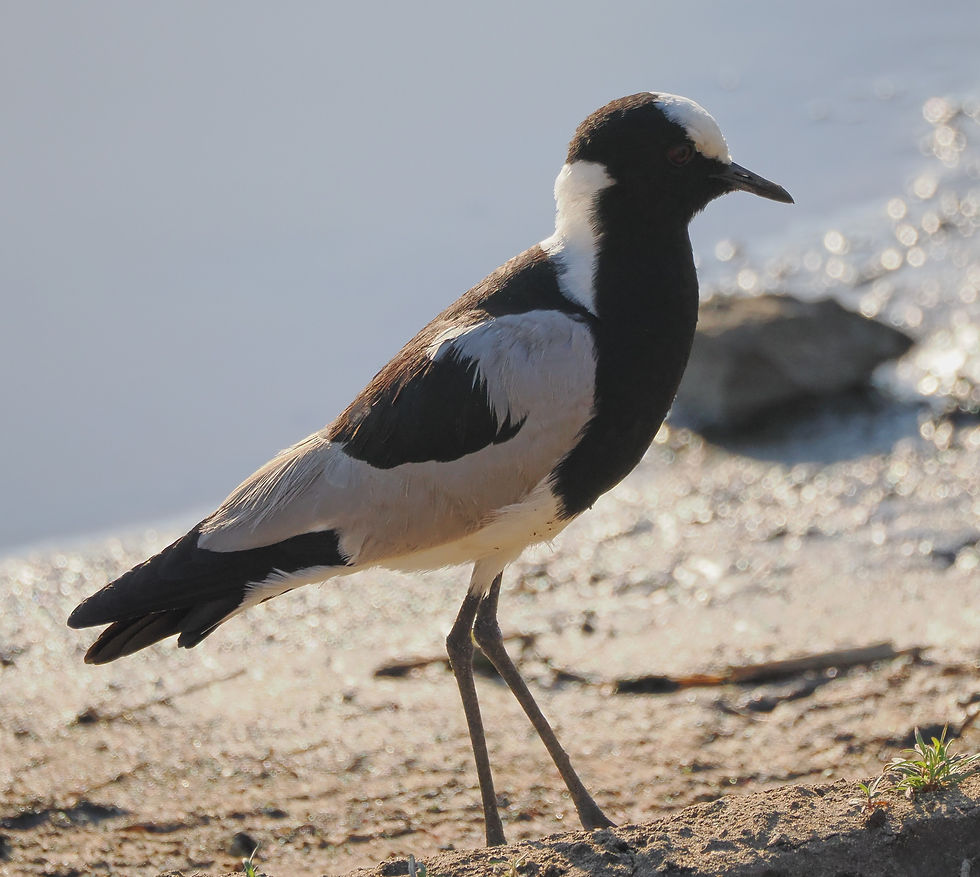

Crowned Lapwing - More likely found in open spaces. Identifiable by the white "halo" around its head. Often nests on sports fields. Lapwing chicks are precocial meaning they are up and independently operating quickly. Like the one below


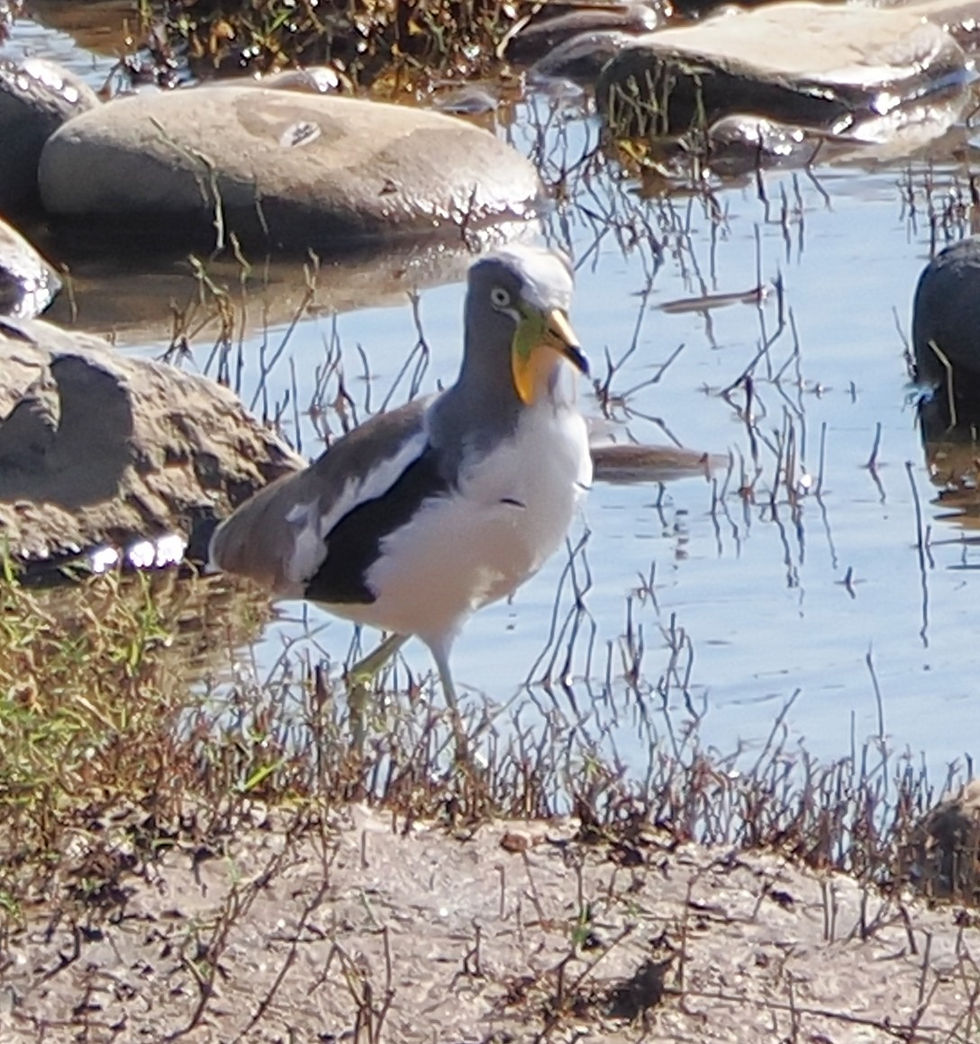
White-crowned Lapwing - Not sure why the "white-crown" gets the feature in the name - I would call this a Yellow-wattled Lapwing. Another feature that the first photo below doesn't have is carpel spurs (look for the little black spikes on the chest in the second photo). This species is fearless in the face of hippos and crocs -- I'm guessing there isn't enough meat on these bones to make it worth eating.


Water Thick-knee - Now here is bird with the right name -- they have Thick-knees and they hang by the water.


Black-winged Stilt - This elegant black & white bird stands on top of awkwardly long red stilts. It has the longest legs relative to its body of any bird in the world.


African Jacana - This extremely long-toed (a reach of more than 6 inches) on a 12 inch bird. The mating roles are reversed -- females call to attract males and the incubation & chick-rearing duties are strictly male.


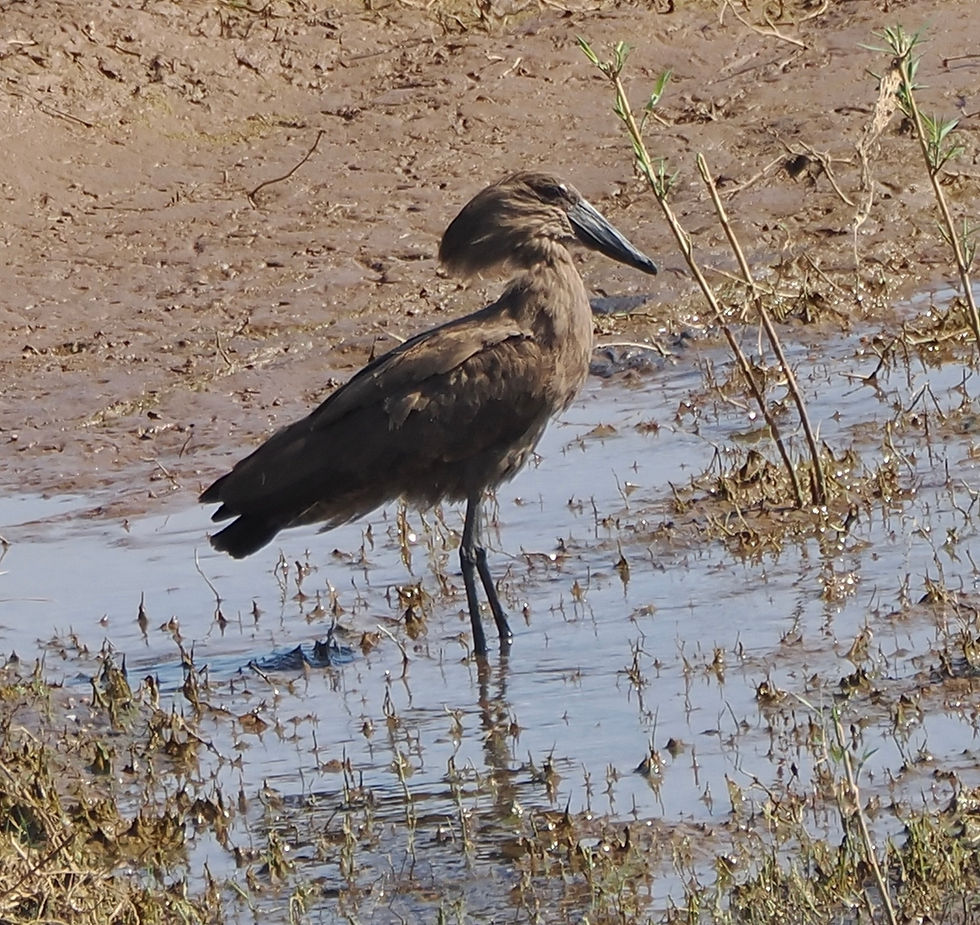
Hamerkop - This bird stands alone -- not closely related to any other species. It is considered by some to be bad luck, but also believed that its call presages rain. There is no doubt that the time and energy required to build its extraordinary nest, which frequently includes stones, tortoise shells, snake skin, bons, plastic and more, distinguishes it as if it's unusual shape didn't do that already..

Marabou Stork - A large stork, one of two birds designated in the "Ugly 5 of Kruger". It has a very prehistoric (dinosaur-like) look and a large pink inflatable air-sac hanging from it's neck. Judge for yourself...


Woolly-necked Stork - I love this stork's faux wooly neck -- it is amazing what feathers can do! They typically sleep while standing on a high, dead branch. They are almost mute, with extremely weak voice limited to soft croaks, hisses or honks -- their main form of communication is loud bill clattering.


Yellow-billed Stork - This species was in Shingwedzi en force, but they should have flown north over a month ago. As soon as we headed south, we saw no more. They eat fish, frogs, crabs and insects.


African Openbill - This is a stork, but its bill doesn't come together tightly. They use this uniquely shaped bill to open snails and mussels, sometimes like a nutcracker. Often they lay multiple mussels on the shore to dry and make them easier to open.

African Spoonbill - Although you can't see them in the photo -- the best feature of this species is the spoon (spatula) shape at the end of the bill.

Goliath Heron - The world's biggest Heron standing @5 feet tall. Sometimes it hangs with Fish Eagles and they fight over each other's prey. It's crown is magnificent when it is fluffed up.


Grey Heron - The closest equivalent to our Great Blue Heron


Western Cattle Egret - Initially we thought this was a Intermediate Egret as Cattle Egrets are more likely to have out on land, but we finally determined they were Cattle Egret. Although last year eBird separated this species across the globe -- we share the Western designation with South Africa. The Eastern Cattle Egret is only in Asia.


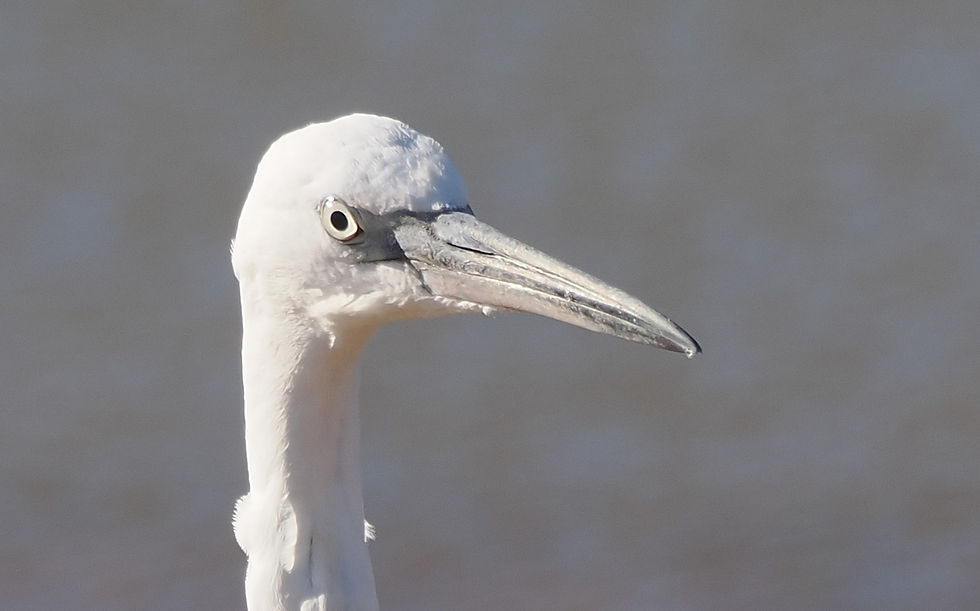
Little Egret - Really in love with this bird - its beautiful and fun and friendly... it comes close.



Comments