

Tanagers are actually Cardinals... but then what are Tanagers?

A Tanager, a Cardinal, a Tanager, a Cardinal -- which is it -- a Cardinal even though it has the name... David, my guide, explained this to me, but I'm still not certain I quite get it. Apparently birders (and scientists) are rather attached to names and are reticent to change them even when they are down right incorrect. C'est la vie and la birding!
Tanagers (even if in name only)

Dusky-faced Tanager - We got lucky to see this bird across the road from the tram entrance with no traffic because of the landslide. My only sighting on the trip.


Crimson-collared Tanager - this is a fabulous bird we ended up seeing a few times and always at the feeders at our lodge in Sarapiqui.


Scarlet-rumped Tanager - probably the most common Tanager we saw with the possible exception of the Summer Tanager...


Female Scarlet Rumped-Tanager


Palm Tanager - This plain species is pretty ubiquitous around the country, I still think they are stunning.


Blue-gray Tanager - This species was also all over the place, but still was challenging getting a good photo.

Love the blue feet!

Two Scarlet-rumped in the back

Golden-hooded Tanager - probably the most spectacular plumage of any Tanager.


Silver-throated Tanager - we had some nice feeder time with this species at the Savagre feeders and at one of our lunch stops (with the Papaya)


No Portrait
Summer Tanager


Tanagers by another name - Saw a lot of the species on this page but spent a lot of time with the Honeycreepers -- beautiful birds!

Red-throated Ant-Tanager - had both sexes of this bird at the Butterfly farm feeders.


Female


Green Honeycreeper - this bird is named after the Female of the species (YAY!) who is normally green, but this is an oddly plumbed one -- the white and yellow spots were odd. The male is more of an Aqua than a green.


Male

Female


Male


Female

Blue Dacnis - from the Pacific coast on a rainy day. Normally the blue is incredible.


Red-legged Honeycreeper - Males are blue, Females are green, all have those fabulous red-legs!


SO the bird with the dark legs is a Green Honeycreeper...


Shining Honeycreeper - Ah the last of the Honeycreepers -- this one with the bright yellow legs. Like a red-legged males are blue, females are green (for the most part).


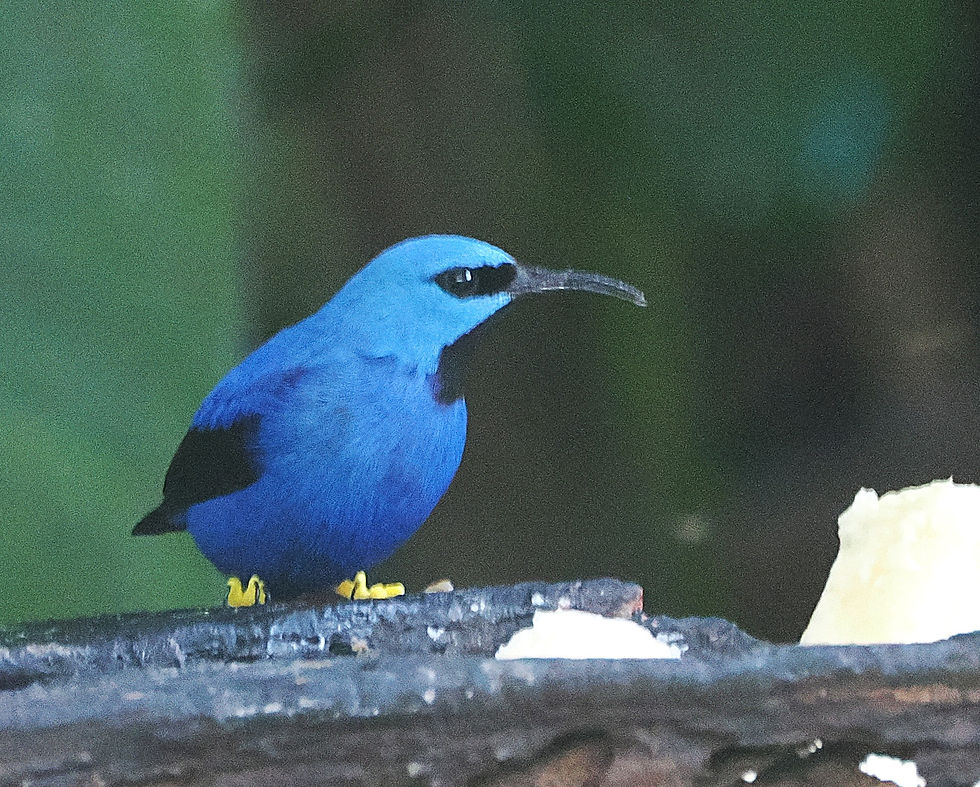


Red legs = Red-legged Honeycreeper

Euphonia - painting this group made me realize I did not always have to draw the whole bird -- many of these the only distinction is the size and position of the yellow spot atop the head.

Yellow-throated Euphonia - we could only identify this from the photo. Thanks Esteban!


Scrub Euphonia - this is a female, so doesn't match the portrait.

The male in on top of the foliage.


Female

Yellow-crowned Euphonia - Yup the crown is yellow!


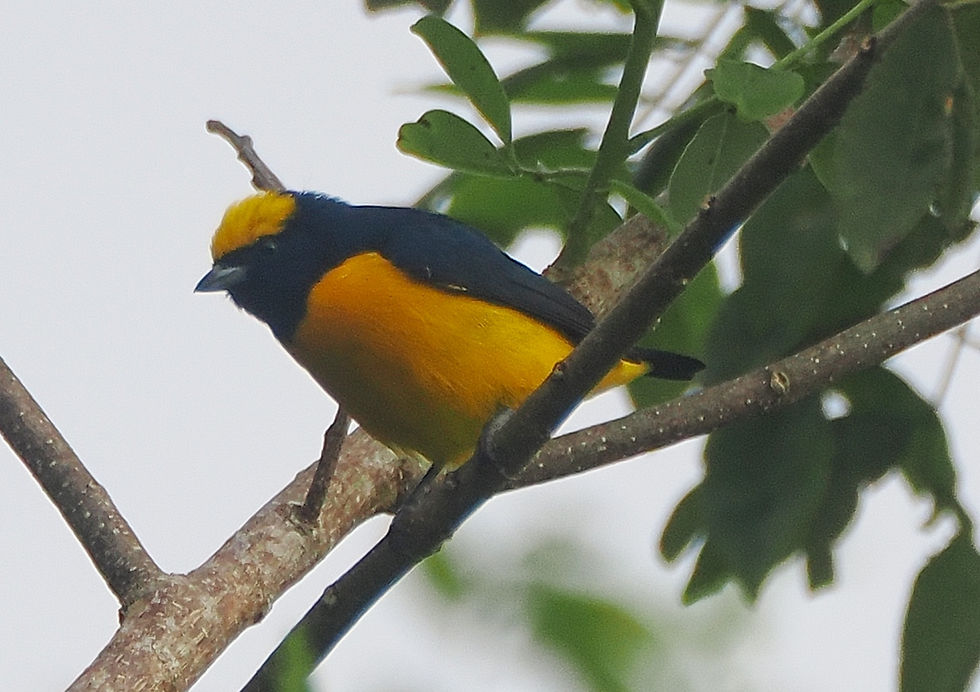

Olive-backed Euphonia - this is a particularly small Euphonia we saw a several spots in the Caribbean Lowlands - the feeders at the Butterfly Farm and Cope's


A Tanager by any name will look just as sweet... or something like that.


Comments